Showing posts with label Family. Show all posts

Saturday, November 8, 2014

Ninth Ward by Jewell Parker Rhodes


Rhodes, J. P. (2010). Ninth ward. New York, NY: Little Brown.

Summary: Lanesha lives with Mama Yaya, the woman who delivered her as her birth mother died. They live in the Ninth Ward of New Orleans and Lanesha, has the power to see ghosts; this power ostracizes her from many in her community. Mama Yaya, a clairvoyant, knows a bad hurricane is on its way and helps prepare Lanesha for this natural disaster.

Review: A slow start. Lots of time with exposition in the beginning but once Hurricane Katrina is on its way, this is a hard book to put down.

Diversity: A glimpse at what happened to so many Black families during Katrina.

Suggestions for Teachers: Would be good to teach as a core text in ELA and/or Social Studies core paired with non-fiction about Hurricane Katrina.

Reading Level:

  1. Quantitative: Lexile 470L, ATOS Book Level 7.00-9.98, Flesh-Kincaid 6.51-10.34, 7.04-9.57RMM
  2. Qualitative: This text is moderately complex; it is chronological. The language is largely contemporary and familiar but also a lot of vocab connected to New Orleans and voodoo. Those who have knowledge of New Orleans, Hurricane Katrina will have a stronger understanding.
Content Areas: English

Common Core State Standards:


CCSS.ELA-LITERACY.RL.6.2
Determine a theme or central idea of a text and how it is conveyed through particular details; provide a summary of the text distinct from personal opinions or judgments.
Describe how a particular story's or drama's plot unfolds in a series of episodes as well as how the characters respond or change as the plot moves toward a resolution.

CCSS.ELA-LITERACY.RL.6.4
Determine the meaning of words and phrases as they are used in a text, including figurative and connotative meanings; analyze the impact of a specific word choice on meaning and tone

Relevant links: Teaching Books, Jewell Parker Rhodes website, Hachette Book Group

Subjects/Themes: New Orleans, family, acceptance, values


Awards: N/A

Series Information: N/A

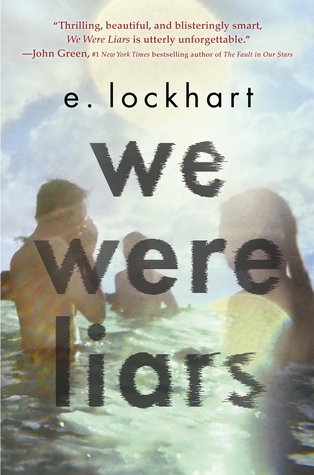
We Were Liars by E. Lockhart


Lockart, E. (2014). We were liars. New York, NY: Delacorte.


Summary: Cadence Sinclair is the oldest grandchild of a very rich and privileged family who spends their summers on their own private island. Despite their seemingly perfect exteriors, a lot of trouble is under the surface. Cadence falls in love with Gat, a friend of her cousin Johnny. Each summer they spend together. One day when she is fifteen, she wakes us nearly naked on the beach with a severe head injury. This novel shares her narration from that summer and a summer two years later.
Review: An intense novel that has you gripping the book at the end where everything you believed is suddenly turned on its head.

Diversity: Despite being about a privileged, rich white family, this book is about race and how race acts as a threat.

Suggestions for Teachers: Great to have in a high school classroom library. Would be perfect for a unit on power and privilege. It could easily be used as a selection for literature circles.

Reading Level:

  1. Quantitative: Lexile 600L, ATOS Book Level 9.67-12.01, Flesh-Kincaid 8.32-12.12, 8.41-10.81RMM
  2. Qualitative: This text is moderately complex; there are a lot of flashbacks and it takes a sophisticated reader to understand the ending and the effects of an unreliable narrator. The language is largely contemporary and familiar but also very lyrical. Those who have knowledge of depression and Sylvia Plath will have a stronger understanding but this is a great text to introduce Plath as well.
Content Areas: English

Common Core State Standards:


CCSS.ELA-LITERACY.RL.9-10.2
Determine a theme or central idea of a text and analyze in detail its development over the course of the text, including how it emerges and is shaped and refined by specific details; provide an objective summary of the text.
CCSS.ELA-LITERACY.RL.9-10.3
Analyze how complex characters (e.g., those with multiple or conflicting motivations) develop over the course of a text, interact with other characters, and advance the plot or develop the theme.
CCSS.ELA-LITERACY.RL.9-10.5
Analyze how an author's choices concerning how to structure a text, order events within it (e.g., parallel plots), and manipulate time (e.g., pacing, flashbacks) create such effects as mystery, tension, or surprise.

CCSS.ELA-LITERACY.RL.9-10.7
Analyze the representation of a subject or a key scene in two different artistic mediums, including what is emphasized or absent in each treatment (e.g., Auden's "Musée des Beaux Arts" and Breughel's Landscape with the Fall of Icarus).
Relevant links: Teaching Books

Subjects/Themes: privilege, power, inheritance, betrayal


Awards: N/A

Series Information: N/A

Sunday, October 26, 2014

Chik Chak Shabbat by Mara Rockliff & Kyrsten Brooker

Rockliff, M. (2014). Chik chak Shabbat (K. Brooker, Illustrator). Somerville, MA: Candlewick Press.


Summary: Goldie Simcha makes cholent every Saturday night for the neighbors in her building. It is a special night where everyone comes together and hears Goldie's stories from her childhood. One Saturday, Goldie is sick and there is no cholent. The neighbors decide to bring their own special dishes over to Goldie's and Goldie appreciates her community.

Review: This is a modern, multicultural Stone Soup. It's a beautiful tribute to diverse communities taking care of each other. This picture book is great for urban communities with many different ethnic groups living in close proximity.

Diversity: Goldie Simcha is a Jewish woman who lives in an apartment building with a Latino family, an Italian woman, a Korean man and an Middle Eastern family. Goldie shares the Jewish tradition of Shabbat with her neighbors and when she can't cook for them, they cook for her sharing their cultural treats. Most importantly, they enjoy each other's company and the idea of not being together with Goldie sick is unfathomable to them. This picture book portrays diverse groups of people taking care of one another. It is not about one group of people, but a celebration of various cultures who appreciate one another.

Suggestions for Teachers: This picture book would be a great addition for a unit study on community and/or neighborhoods. It would ask students to think about their own neighborhoods and the people in their neighborhoods who take care of them.

Reading Level:

  1. Quantitative: Lexile 690L, ATOS Book Level 4.3, Flesh-Kincaid 4.7, Readability 5.9, 5.4 RMM
  2. Qualitative: This text is moderately complex; it is fairly chronological except for one flashback that Goldie has. There is some repetition with the appearance of the various neighbors. The language is simple although there are some cultural words like cholent and Shabbat which may need more explanation. The theme of community taking care of one another is simple and applicable in a school setting. Students who have prior knowledge of Shabbat and Jewish culture will access this book more easily though students who have no prior schema can make great inferences about Shabbat and cholent based on the context of this book. The pictures help give the sense of a busy apartment complex and give meaning to the text.

Content Areas: Literacy, History, Family, Community

Common Core State Standards:


CCSS.ELA-LITERACY.RL.1.2
Retell stories, including key details, and demonstrate understanding of their central message or lesson.
CCSS.ELA-LITERACY.RL.1.3
Describe characters, settings, and major events in a story, using key details.
CCSS.ELA-LITERACY.RL.1.4
Identify words and phrases in stories or poems that suggest feelings or appeal to the senses.
Relevant links:  Author's website

Subjects/Themes: family, community, Judaism

Awards: N/A

Series Information: N/A

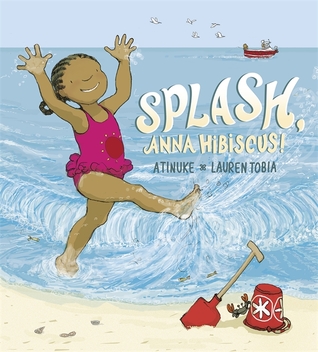
Splash, Anna Hibiscus! by Atinuke & Lauren Tobia


Atinuke, & Tobia, L. (2013). Splash, Anna Hibiscus! London: Kane Miller.


Summary: Anna Hibiscus lives in Africa with her family and friends. It is a hot day. She wants to play in the waves. Everyone seems too busy to play in the waves with her, so she decides to play with the waves themselves. Her joy is contagious and soon everyone who was too busy before decides to join Anna Hibiscus in the water.

Review: This is a beautiful picture book of a sweet girl who wants to enjoy her natural surroundings. The pictures are fun and engaging and the characters' names are also fun. It is a joyful book.

Diversity: This book features an African girl and her extended family and friends. Lots of beautiful pictures of people in various shades of brown. Anna Hibiscus's mother is white and her father is black so this shows a multiracial family and a close-knit, multi-generational, happy family at that. The only issue is that Anna Hibiscus lives in Africa, not a particular city or country in Africa, but Africa the continent which generalizes all Africans.

Suggestions for Teachers: This picture book would be a great addition for a unit study on families and what families look like. It would be a great read-aloud and a wonderful addition to a classroom library.

Reading Level:

  1. Quantitative: Lexile 500L, ATOS Book Level 4.0, Flesh-Kincaid 3.0,4.0 RMM
  2. Qualitative: This text is slightly complex as it is organized in a traditional manner with a recognizable pattern. Anna asks various members of her family to join her and they all are too busy until they realize how much fun she is having. The language is simple and the only hiccup for students may be the characters' unusual names as they are ideas and adjectives. The theme of doing something for yourself despite what others think is accessible. Students need no prior schema to access this book. The pictures do a wonderful job of showing the beauty of family and the joy of the ocean.
Content Areas: Literacy, Geography

Common Core State Standards:


CCSS.ELA-LITERACY.RL.2.2
Recount stories, including fables and folktales from diverse cultures, and determine their central message, lesson, or moral.
CCSS.ELA-LITERACY.RL.2.3
Describe how characters in a story respond to major events and challenges.
CCSS.ELA-LITERACY.RL.2.4
Describe how words and phrases (e.g., regular beats, alliteration, rhymes, repeated lines) supply rhythm and meaning in a story, poem, or song.
CCSS.ELA-LITERACY.RL.2.5
Describe the overall structure of a story, including describing how the beginning introduces the story and the ending concludes the action.
Relevant links:  Teaching Books, Read Aloud Video

Subjects/Themes: Africa, family, beach

Awards: N/A

Series Information: part of the Anna Hibiscus series

Monday, September 15, 2014

Brown Girl Dreaming by Jacqueline Woodson

Woodson, J. (2014). brown girl dreaming. New York, NY: Nancy Paulsen Books. 


Summary:
Jacqueline Woodson's newest book is a memoir about her childhood during the 1960s and 70s written in verse.  Woodson begins with her early upbringing in Ohio, but most of her childhood includes long summers in South Carolina where her mother's parents lived and New York, where her mother moves as Jacqueline enters school.  Part of this memoir is a tribute to Woodson's long family history before her birth and the strength of her African American heritage.  Woodson's relationship with her grandmother, a strong Jehovah's Witness which later dictate her own religious practices are chronicled here.  This memoir is also a peek into the South during the early Civil Rights Movement, where Blacks are organizing as segregation is at its height.  Woodson is able to capture the essence of the time period through vivid sensory detail.

Review:
Woodson writes an evocative memoir in verse.  It is a tribute to family and how family shapes individuals.  It is also a bit of an exploration of her family tree.  A quick, beautiful read for those interested in Black history especially in the South during the late 1960's.

Suggestions for Teachers:
Students might have fun imitating sections of this book since it is written in verse.  Excerpts from this could be used at the beginning of the year for community building and units on memoirs or "Where I'm From" poems considering the work of Linda Christensen. There is also a lot in here on the power of reading and writing.  Those sections could be excerpted for the English classroom.  History teachers could use this as a primary text to go along with the textbook when studying Voting Rights Act, Civil Rights, the Black Panthers and also the effects of slavery and reconstruction.  Note: this is a quick read, but not a suspenseful one.  

Reading Level:
  1. Quantitative: Lexile 1350L, ATOS Book Level 4.5, Flesh-Kincaid 9.7, RMM 7.5, Readability Grade Level, 10.0, Titlewave RL: 4.3
  2. Qualitative:  The organization of brown girl dreaming is a little intricate.  There are time shifts back to before Jacqueline Woodson was born.  Since this memoir is written in verse, it has fairly complex language features including abstract ideas and figurative language.  At the same time, many of the sentence structures are very simple.  The vocabulary is mostly simple, but Woodson takes some liberties with language combining phrases into one word to sound more vernacular.   Woodson uses italics to indicate dialogue.  There is some vocabulary connected to a Southern context. Most of the knowledge demands are in the realm of what students know, but, students who have schema surrounding the Voting Rights Act, segregation, Civil Rights Movement, slavery and reconstruction and the Black Panther Party will have a stronger understanding of the text.  There are some Biblical references and knowledge surrounding Jehovah's Witnesses will be helpful.

Content Areas: English (teaching memoir, verse, sensory description, setting), History (1960s & 70's, Segregation, Voting Rights, Freedom Riders, Civil Rights, Black Panther Party)

Common Core State Standards:
  • CCSS.ELA-LITERACY.RH.6-8.4 Determine the meaning of words and phrases as they are used in a text, including vocabulary specific to domains related to history/social studies.
  • CCSS.ELA-LITERACY.RH.6-8.5 Describe how a text presents information (e.g., sequentially, comparatively, causally).
  • CCSS.ELA-LITERACY.RH.6-8.6 Identify aspects of a text that reveal an author's point of view or purpose (e.g., loaded language, inclusion or avoidance of particular facts).
Relevant Links/Digital Content: Teaching Books


Subjects/themes: African American history, women, Civil Rights, Voting Rights, Segregation, reading identity, writing identity
Awards: N/A as of today
Series Information:  N/A