Showing posts with label middle school. Show all posts

Monday, December 1, 2014

This I Believe essays


Special features. (2005). Retrieved December 1, 2014, from http://thisibelieve.org/feature/

Summary: This is a collection of "This I Believe" essays and podcasts organized by topic.  

Review:  These short essays are engaging and are often models to help students craft their own belief statements.

Diversity: These essays feature diverse voices.

Suggestions for Teachers: These essays can serve as models for students to craft their own personal essays. They also can be used with various topical units. They can be used to analyze the craft of this type of non-fiction. Students may also contribute their own personal essay to This I Believe.
  1. Quantitative: N/A
  2. Qualitative: No background information is necessary. These essays are meant to stand alone. Depending on the subject and author, language will vary although it is overall contemporary and familiar. Organization often includes anecdotes or memories to support evidence and thesis.
Content Areas: English, Contemporary Issues, Social Studies

Common Core State Standards:


CCSS.ELA-LITERACY.CCRA.R.1
Read closely to determine what the text says explicitly and to make logical inferences from it; cite specific textual evidence when writing or speaking to support conclusions drawn from the text.
CCSS.ELA-LITERACY.CCRA.R.2
Determine central ideas or themes of a text and analyze their development; summarize the key supporting details and ideas.
CCSS.ELA-LITERACY.CCRA.R.3
Analyze how and why individuals, events, or ideas develop and interact over the course of a text.

Relevant links: This I Believe
Subjects/Themes: English, Social Studies, Personal Narrative


Awards: N/A

Series Information: N/A

90-second Newbery Films created by students; started by author James Kennedy


Kennedy, J. (2013, July 4). 25 successful 90-second Newbery videos. Retrieved December 1, 2014, from http://jameskennedy.com/2013/07/04/the-25-most-popular-90-second-newbery-videos-so-far/

Summary: These are 25 of the most popular student-created 90-second Newbery films.  James Kennedy created a contest for students to make films that cover the entire plot of a Newbery winner or honor book in approximately 90 seconds.  

Review:  These films are great to watch when teaching Newbery books.  They are fun and display creativity of a variety of genres.

Diversity: Some films include students of color. However, many of the Newbery books are white in general.


Suggestions for Teachers: Great to inspire students to do their own book projects. An engaging idea to foster reading the whole book, identifying key plot points, collaborating and creating.
  1. Quantitative: N/A
  2. Qualitative: Students with knowledge of the particular Newbery book will understand these films better. However, these students could be used as a pre-reading activity to build schema. They are mostly organized chronologically. Some films use the actual dialogue from the text itself. Depending on the book, the language could be contemporary or more from that period. Students will be able to make meaning with the visual context clues.
Content Areas: English, Drama

Common Core State Standards:


CCSS.ELA-LITERACY.CCRA.R.1
Read closely to determine what the text says explicitly and to make logical inferences from it; cite specific textual evidence when writing or speaking to support conclusions drawn from the text.
CCSS.ELA-LITERACY.CCRA.R.2
Determine central ideas or themes of a text and analyze their development; summarize the key supporting details and ideas.
CCSS.ELA-LITERACY.CCRA.R.3
Analyze how and why individuals, events, or ideas develop and interact over the course of a text.

Relevant links: James Kennedy
Subjects/Themes: English, Drama


Awards: N/A

Series Information: N/A

Sunday, November 30, 2014

Ms. Yingling Reads


Yingling, K. (2014, November 30). Fantasy [Blog post]. Retrieved from http://msyinglingreads.blogspot.com/


Summary: Ms. Yingling's blog for middle school librarians and ELA teachers who are looking for the right book for each kid.  She publishes reviews daily and is especially thinking about how to get boys reading.

Review:  This blog is a great resource for librarians and teachers of middle school students.  There is a wealth of information for all kinds of middle grade books.  She gives a summary and then strengths and weaknesses.  Just reading for the strengths and weaknesses can help you develop your collection.

Diversity: Ms. Yingling is an ally the campaign for diverse books and often always features diverse books as soon as she gets them in her hands. Each Wed is devoted to reviews of diverse books.


Suggestions for Teachers: Use this website to develop your collection and to recommend books to your students.

Reading Level:

  1. Quantitative: N/A
  2. Qualitative: Easy to use layout, daily concise postings and good book lists. This is for professionals in education to get ideas about books for their students. Students could use Ms. Yingling's reviews to search for books they might like. The text is largely familiar to all. No prior knowledge is necessary.
Content Areas: English, Social Studies

Common Core State Standards:


CCSS.ELA-LITERACY.CCRA.R.1
Read closely to determine what the text says explicitly and to make logical inferences from it; cite specific textual evidence when writing or speaking to support conclusions drawn from the text.
CCSS.ELA-LITERACY.CCRA.R.2
Determine central ideas or themes of a text and analyze their development; summarize the key supporting details and ideas.
CCSS.ELA-LITERACY.CCRA.R.3
Analyze how and why individuals, events, or ideas develop and interact over the course of a text.

Relevant links: Ms. Yingling Reads
Subjects/Themes: teaching resources, ELA, Common Core, text complexity, lesson plans


Awards: N/A

Series Information: N/A

Monday, November 24, 2014

Living with Jackie Chan by Jo Knowles


Knowles, J. (2013). Jumping Off Swings: Vol. 2. Living with Jackie Chan. New York, NY: Candlewick.

Summary: Josh is spending his senior year of high school with his Uncle Larry, a man who bases his life off the principles of karate. Josh needs this distraction as he is dealing with his own internal turmoil, leaving his hometown with his own secret. He makes friends, teaches karate and even develops a crush trying to suppress his past. Will it come back to haunt him?

Review: An interesting read of internal conflict. Made me very curious about the first part of this series.

Diversity: Upstairs neighbors in this book are gay parents.

Suggestions for Teachers: Use this in a coming-of-age unit or for lit circles.

Reading Level:

  1. Quantitative: Lexile 530, ATOS Book Level 9.67-12.01, Flesh-Kincaid 8.32-12.12, 8.41-10.81 RMM
  2. Qualitative: This text is slightly complex. It is organized chronologically and there are a few flashbacks. Vocabulary is contemporary and familiar. Those who have read the first book in the series will have a stronger understanding of the story.
Content Areas: English

Common Core State Standards:

CCSS.ELA-LITERACY.RL.9-10.2
Determine a theme or central idea of a text and analyze in detail its development over the course of the text, including how it emerges and is shaped and refined by specific details; provide an objective summary of the text.
CCSS.ELA-LITERACY.RL.9-10.3
Analyze how complex characters (e.g., those with multiple or conflicting motivations) develop over the course of a text, interact with other characters, and advance the plot or develop the theme.
Relevant links: Teaching Books, Jo Knowles
Subjects/Themes: family, acceptance, teen pregnancy


Awards: N/A

Series Information: N/A

Saturday, November 22, 2014

The Port Chicago 50: Disaster, Mutiny and the Fight for Civil Rights by Steve Sheinkin


Sheinkin, S. (2014). The Port Chicago 50: Disaster, mutiny and the fight for civil rights. New York, NY: Roaring Brook.

Summary: In July 1944, an explosion killed 300 African American men and injured many more. Black men were stationed at this Bay Area naval base doing the dangerous work of loading heavy explosives onto ships without any training or safety measures. White officers ordered Black men to do this work even after the explosion. This is the story of the 50 men who said they wouldn't return to this job. These men were accused of mutiny and the punishment was death by rifle. This is their story.

Review: An accessible and fascinating look at one of the greatest injustices to African Americans, and arguably the birth of the Civil Rights Movement. Sheinkin makes the stories of Joe Small and his men come alive and you can't help but feel the moral contempt here. I kept wondering what I would have said or done. I only hoped to have been so brave.

Diversity: An beautiful portrayal of humanity and bravery of the Port Chicago 50.

Suggestions for Teachers: Teach this book for US history. Teach it as part of WWII. Teach it when teaching research and primary and secondary resources.

Reading Level:

  1. Quantitative: Lexile 950, ATOS Book Level 7.00-9.98, Flesh-Kincaid 6.51-10.34, 7.04-9.57 RMM
  2. Qualitative: This text is moderately complex. It is organized chronologically. Through personal stories, this text comes alive for readers. There is some technical vocabulary and there are lots of details that students may either be excited by or overwhelmed by, but Sheinkin does a phenomenal job of creating suspense. Knowledge of WWII and segregation will be helpful, but Sheinkin gives a lot of context for readers.
Content Areas: Social Studies

Common Core State Standards:

CCSS.ELA-LITERACY.RI.8.1
Cite the textual evidence that most strongly supports an analysis of what the text says explicitly as well as inferences drawn from the text.
CCSS.ELA-LITERACY.RI.8.2
Determine a central idea of a text and analyze its development over the course of the text, including its relationship to supporting ideas; provide an objective summary of the text.
CCSS.ELA-LITERACY.RI.8.3
Analyze how a text makes connections among and distinctions between individuals, ideas, or events (e.g., through comparisons, analogies, or categories).
CCSS.ELA-LITERACY.RI.8.6
Determine an author's point of view or purpose in a text and analyze how the author acknowledges and responds to conflicting evidence or viewpoints.
CCSS.ELA-LITERACY.RI.8.8
Delineate and evaluate the argument and specific claims in a text, assessing whether the reasoning is sound and the evidence is relevant and sufficient; recognize when irrelevant evidence is introduced.
CCSS.ELA-LITERACY.RI.8.9
Analyze a case in which two or more texts provide conflicting information on the same topic and identify where the texts disagree on matters of fact or interpretation.
Relevant links: Teaching BooksSteve Sheinkin
Subjects/Themes: family, acceptance, PTSD, trauma

Awards: N/A

Series Information: N/A

Tuesday, November 11, 2014


Cholodenko, G. (2013). A Tale from Alcatraz: Vol. 3. Al Capone does my homework. New York, NY: Dial Books for Young Readers.

Summary: Moose Flanagan and his friends are off to solve a new mystery. Who started the fire in their apartment? Mrs. Trixle thinks it's Natalie. Also, lots of money has been coming onto Alcatraz. Where's it coming from? Moose, Annie, Jimmy, Natalie and Piper are at it again.

Review: My favorite of the Al Capone series so far. A real dilemma for kids to deal with when someone who is different gets blamed. Lots of parallels in real life. Moose is growing up in this book and it's fun to see how he's maturing.

Diversity: Moose's sister, Natalie, has Autism though at the time there isn't a name for it.

Suggestions for Teachers: Great book to study ally-ship in an ELA classroom and connect to CA history as well. Lots of parallels for students when studying difference and family.

Reading Level:

  1. Quantitative: Lexile 600L, ATOS Book Level 7.00-9.98, Flesh-Kincaid 6.51-10.34, 7.04-9.57 RMM
  2. Qualitative: This text is moderately complex; the organization is chronological and straightforward. The language is largely contemporary. Knowledge of Alcatraz and Al Capone will make this text more accessible to readers.

Content Areas: English, Social Studies

Common Core State Standards:

CCSS.ELA-LITERACY.RL.6.2
Determine a theme or central idea of a text and how it is conveyed through particular details; provide a summary of the text distinct from personal opinions or judgments.
CCSS.ELA-LITERACY.RL.6.3
Describe how a particular story's or drama's plot unfolds in a series of episodes as well as how the characters respond or change as the plot moves toward a resolution.
CCSS.ELA-LITERACY.RL.6.9
Compare and contrast texts in different forms or genres (e.g., stories and poems; historical novels and fantasy stories) in terms of their approaches to similar themes and topics.
Relevant links: Teaching Books

Subjects/Themes: family, acceptance, difference, mystery

Awards: N/A

Series Information: N/A

Saturday, November 8, 2014

Ninth Ward by Jewell Parker Rhodes


Rhodes, J. P. (2010). Ninth ward. New York, NY: Little Brown.

Summary: Lanesha lives with Mama Yaya, the woman who delivered her as her birth mother died. They live in the Ninth Ward of New Orleans and Lanesha, has the power to see ghosts; this power ostracizes her from many in her community. Mama Yaya, a clairvoyant, knows a bad hurricane is on its way and helps prepare Lanesha for this natural disaster.

Review: A slow start. Lots of time with exposition in the beginning but once Hurricane Katrina is on its way, this is a hard book to put down.

Diversity: A glimpse at what happened to so many Black families during Katrina.

Suggestions for Teachers: Would be good to teach as a core text in ELA and/or Social Studies core paired with non-fiction about Hurricane Katrina.

Reading Level:

  1. Quantitative: Lexile 470L, ATOS Book Level 7.00-9.98, Flesh-Kincaid 6.51-10.34, 7.04-9.57RMM
  2. Qualitative: This text is moderately complex; it is chronological. The language is largely contemporary and familiar but also a lot of vocab connected to New Orleans and voodoo. Those who have knowledge of New Orleans, Hurricane Katrina will have a stronger understanding.
Content Areas: English

Common Core State Standards:


CCSS.ELA-LITERACY.RL.6.2
Determine a theme or central idea of a text and how it is conveyed through particular details; provide a summary of the text distinct from personal opinions or judgments.
Describe how a particular story's or drama's plot unfolds in a series of episodes as well as how the characters respond or change as the plot moves toward a resolution.

CCSS.ELA-LITERACY.RL.6.4
Determine the meaning of words and phrases as they are used in a text, including figurative and connotative meanings; analyze the impact of a specific word choice on meaning and tone

Relevant links: Teaching Books, Jewell Parker Rhodes website, Hachette Book Group

Subjects/Themes: New Orleans, family, acceptance, values


Awards: N/A

Series Information: N/A

Friday, October 31, 2014

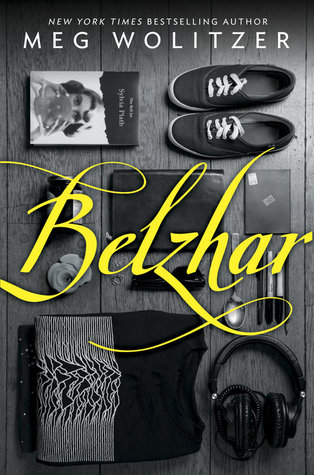
Belzhar by Meg Wolitzer

Wolitzer, M. (2014). Belzhar. New York, NY: Dutton Books for Young Readers.


Summary: After the death of her first love, Reeve, Jam is sent to The Wooden Barn, a school for students who have experienced trauma. She is chosen to be in the mysterious Special Topics for English class and the author study selected by Mrs. Quenell is Sylvia Plath. Supernatural things happen when Jam and her classmates write in their journals. Pasts are revealed and uncomfortable conversations are had.
Review: This is a consuming and surprising read! For 8th grade and up, students will enjoy the supernatural aspects of this book.

Diversity: Jam's roommate DJ is part Asian and gay.

Suggestions for Teachers: Great to have in a classroom library and would be a good for a unit on teaching perspective and unreliable narration. Teachers could also teach this along with Sylvia Plath's works.

Reading Level:

  1. Quantitative: Lexile 1050-1335L, ATOS Book Level 9.67-12.01, Flesh-Kincaid 8.32-12.12, 8.41-10.81RMM
  2. Qualitative: This text is moderately complex; it is chronological but there are flashbacks and there is a supernatural element that occurs when the characters write in their journals. The language is largely contemporary and familiar. Those who have knowledge of depression and Sylvia Plath will have a stronger understanding but this is a great text to introduce Plath as well.
Content Areas: English

Common Core State Standards:


CCSS.ELA-LITERACY.RL.9-10.2
Determine a theme or central idea of a text and analyze in detail its development over the course of the text, including how it emerges and is shaped and refined by specific details; provide an objective summary of the text.
CCSS.ELA-LITERACY.RL.9-10.3
Analyze how complex characters (e.g., those with multiple or conflicting motivations) develop over the course of a text, interact with other characters, and advance the plot or develop the theme.
CCSS.ELA-LITERACY.RL.9-10.5
Analyze how an author's choices concerning how to structure a text, order events within it (e.g., parallel plots), and manipulate time (e.g., pacing, flashbacks) create such effects as mystery, tension, or surprise.

CCSS.ELA-LITERACY.RL.9-10.7
Analyze the representation of a subject or a key scene in two different artistic mediums, including what is emphasized or absent in each treatment (e.g., Auden's "Musée des Beaux Arts" and Breughel's Landscape with the Fall of Icarus).
Relevant links: Teaching Books, Bell Jar Teacher Guide

Subjects/Themes: depression, recovery, therapy, friendship

Awards: N/A

Series Information: N/A

Wednesday, October 29, 2014

The Long Road by Luis Garay


Garay, L. (1997). The long road. Toronto, Canada: Tundra Books.


Summary: War breaks out in Nicaragua when José is visiting his grandmother in town. When he and his mother return, his family has disappeared and their village is in ruins. After several nights traveling by foot, they eventually cross the border. This picture book shows José and his mother's early struggles in a new country.
Review: A beautiful story that many students at my school will identify with.

Diversity: This picture book is a much needed story in classrooms right now especially in recent days when most of America has been watching the US close its doors on small children trying to enter the US for a better life. When I taught a 10th grade newcomer EL class, almost all of the students here in San Francisco had their own border crossing story and many included significant trauma. This book could be in classrooms as a jumping off point for students to share the experiences of leaving sometimes dangerous homes, losing family, and the difficulties children face when learning to live somewhere new. Luis, a Latino boy, represents so many students I know. I wish I knew about this book earlier.

Suggestions for Teachers: This book would be a great read-aloud text especially in an English language class or a newcomer class. It would also be a great text to have facing out in elementary classrooms and will give windows into the lives of immigrant children who come after experiencing trauma.

Reading Level:

  1. Quantitative: Lexile 740-1010L, ATOS Book Level 4.97-7.03, Flesh-Kincaid 4.51-7.72, 5.42-7.92 RMM
  2. Qualitative: This text is moderately complex; it is chronological and it is the story of a journey which will engage many students. The language is simple although there is a lot of text for each page. It is literal and the illustrations support José's difficult journey. The themes of escape to safety and adjustment to new situations are ones students will be able to understand. Those who have knowledge of war or immigration will have an easier time understanding this text.
Content Areas: Literacy, Family, Immigration, Acceptance, Refugees

Common Core State Standards:

CCSS.ELA-LITERACY.RL.4.2
Determine a theme of a story, drama, or poem from details in the text; summarize the text.
CCSS.ELA-LITERACY.RL.4.3
Describe in depth a character, setting, or event in a story or drama, drawing on specific details in the text (e.g., a character's thoughts, words, or actions).
CCSS.ELA-LITERACY.RL.4.9
Compare and contrast the treatment of similar themes and topics (e.g., opposition of good and evil) and patterns of events (e.g., the quest) in stories, myths, and traditional literature from different cultures.
Relevant links: Teaching Books, Immigration unit, Luis Garay website, Teacher's Guide

Subjects/Themes: family, acceptance, perseverance, discrimination, refugees, immigration


Awards: N/A

Series Information: N/A

Friday, October 24, 2014

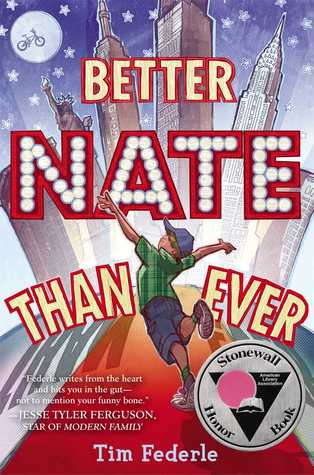
Better Nate Than Ever by Tim Federle


Federle, T. (2014). Better Nate than ever. New York, NY: Simon and Schuster for Young Readers.


Summary: Nate has a big dream. He wants to perform on Broadway. When an audition for a musical version of ET avails itself, Nate plans a surreptitious trip to NYC where hopes of being a star will allow him to feel more at home than he does in his own school.

Review: Federle brings us a character who is questioning his identity and takes us on a ride where we're rooting for Nate, the underdog, and wish him joy and happiness. A great coming of age story for youth.

Diversity: This novel features a kid who doesn't fit in. There are assumptions that Nate is questioning his sexual identity and teased by others at his school as effeminate and possibly gay. This is a story that isn't often told especially for middle grades and that is why I love this book because so many students who question their sexual identities start doing so long before high school where it is more prevalent in YA. This is a great middle school book and it offers a window and possibly a mirror for our youth struggling to figure out who they are.

Suggestions for Teachers: This novel would work well for lit circles with the guiding topic of coming-of-age. It would be a book that should be facing out in a classroom library and book talked.

Reading Level:

  1. Quantitative: Lexile 930L, ATOS Book Level 7.0, Flesh-Kincaid 6.51, 7.0 RMM
  2. Qualitative: This text is slightly complex as there is a singular first person narrator and the narration is chronological. Language is largely contemporary and explicit and thus moderately complex. The theme of an underdog achieving his dream is simple and accessible. Students who have some knowledge of Broadway and New York City might have a stronger understanding.

Content Areas: English, Contemporary Issues

Common Core State Standards:


CCSS.ELA-LITERACY.RL.6.1
Cite textual evidence to support analysis of what the text says explicitly as well as inferences drawn from the text.
CCSS.ELA-LITERACY.RL.6.2
Determine a theme or central idea of a text and how it is conveyed through particular details; provide a summary of the text distinct from personal opinions or judgments.
Describe how a particular story's or drama's plot unfolds in a series of episodes as well as how the characters respond or change as the plot moves toward a resolution.

Relevant links: Tim Federle's website, Teaching Books

Subjects/Themes: coming of age, LGBTQQ

Awards: Odyssey, Stonewall, ALA

Series Information: sequel is Five, Six, Seven Nate!

Thursday, October 23, 2014

Counting by 7s by Holly Goldberg Sloan


Sloan, H. G. (2013). Counting by 7s. New York, NY: Dial Books for Young Readers.


Summary: Willow is a quirky girl who suffers a tragedy at the beginning of this book leaving her without a family. Through unlikely friendships with others who are just as unique and different, Willow learns the true definition of family.

Review: Sloan gives us a tearjerker with Willow chance, a young girl who can master new languages and college textbooks better than she can navigate social interactions. Sloan's choice of diverse major characters is excellent and she gives voice to the often times voiceless here. It is a feel good novel that many students will enjoy.

Diversity: This novel features very diverse characters. First Willow, a person of color who might have autism is just one of the major characters. Mai and Quang-ha, are Willow's friends and they are the children of a feisty Vietnamese nail salon owner. And, Willow's early adult figure is Dell Duke, her counselor who struggles to function in his own life. This is a beautiful cast of characters who are marginalized in society and here they are front and center. I especially love Mai's mom, this nail salon worker who has such voice in this book when often times in popular culture, Vietnamese nail workers are shown serving rich, white women.

Suggestions for Teachers: This is a book that I would use for lit circles or independent reading. You could definitely use it to teach perspective maybe alongside or in place of Seedfolks.

Reading Level:

  1. Quantitative: Lexile 770L, ATOS Book Level 5.6, Flesh-Kincaid 3.9. Readability Grade Level 5.9, 7.6 RMM
  2. Qualitative: This text is moderately complex as there are various third-person perspective narrators. The narration is mostly chronological. Language is largely contemporary and explicit and thus moderately complex. The text has symbolism like the garden; students may only understand it literally but a teacher could choose to focus on symbolism here. Students who have some knowledge of autism and foster care might have a better understanding but it is not needed.

Content Areas: English, Contemporary Issues

Common Core State Standards:

CCSS.ELA-LITERACY.RL.7.1
Cite several pieces of textual evidence to support analysis of what the text says explicitly as well as inferences drawn from the text.


CCSS.ELA-LITERACY.RL.7.2
Determine a theme or central idea of a text and analyze its development over the course of the text; provide an objective summary of the text.
CCSS.ELA-LITERACY.RL.7.3
Analyze how particular elements of a story or drama interact (e.g., how setting shapes the characters or plot).
CCSS.ELA-LITERACY.RL.7.4
Determine the meaning of words and phrases as they are used in a text, including figurative and connotative meanings; analyze the impact of rhymes and other repetitions of sounds (e.g., alliteration) on a specific verse or stanza of a poem or section of a story or drama.
Relevant links: Teaching Books

Subjects/Themes: foster care, autism, coming of age, immigrant labor

Awards: A New York Times Bestseller. An AMAZON Best Book of the Year 2013.  A Kids' Indie Next List Top Ten Book-- #4, Best Books of Autumn 2013.  B.E.A. Buzz Book Award 2013.  A Texas Bluebonnet Award Nominee 2014-2015 Master List.  A School Library Journal Best Book of the Year.  An E.B. White Read Aloud Honor Book. A Dorothy Canfield Fisher Children's Book Award Nominee.  A National Public Radio Best Book of the Year.
Series Information: N/A