Saturday, November 8, 2014

Ninth Ward by Jewell Parker Rhodes


Rhodes, J. P. (2010). Ninth ward. New York, NY: Little Brown.

Summary: Lanesha lives with Mama Yaya, the woman who delivered her as her birth mother died. They live in the Ninth Ward of New Orleans and Lanesha, has the power to see ghosts; this power ostracizes her from many in her community. Mama Yaya, a clairvoyant, knows a bad hurricane is on its way and helps prepare Lanesha for this natural disaster.

Review: A slow start. Lots of time with exposition in the beginning but once Hurricane Katrina is on its way, this is a hard book to put down.

Diversity: A glimpse at what happened to so many Black families during Katrina.

Suggestions for Teachers: Would be good to teach as a core text in ELA and/or Social Studies core paired with non-fiction about Hurricane Katrina.

Reading Level:

  1. Quantitative: Lexile 470L, ATOS Book Level 7.00-9.98, Flesh-Kincaid 6.51-10.34, 7.04-9.57RMM
  2. Qualitative: This text is moderately complex; it is chronological. The language is largely contemporary and familiar but also a lot of vocab connected to New Orleans and voodoo. Those who have knowledge of New Orleans, Hurricane Katrina will have a stronger understanding.
Content Areas: English

Common Core State Standards:


CCSS.ELA-LITERACY.RL.6.2
Determine a theme or central idea of a text and how it is conveyed through particular details; provide a summary of the text distinct from personal opinions or judgments.
Describe how a particular story's or drama's plot unfolds in a series of episodes as well as how the characters respond or change as the plot moves toward a resolution.

CCSS.ELA-LITERACY.RL.6.4
Determine the meaning of words and phrases as they are used in a text, including figurative and connotative meanings; analyze the impact of a specific word choice on meaning and tone

Relevant links: Teaching Books, Jewell Parker Rhodes website, Hachette Book Group

Subjects/Themes: New Orleans, family, acceptance, values


Awards: N/A

Series Information: N/A

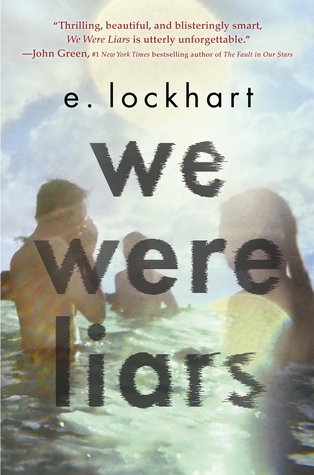
We Were Liars by E. Lockhart


Lockart, E. (2014). We were liars. New York, NY: Delacorte.


Summary: Cadence Sinclair is the oldest grandchild of a very rich and privileged family who spends their summers on their own private island. Despite their seemingly perfect exteriors, a lot of trouble is under the surface. Cadence falls in love with Gat, a friend of her cousin Johnny. Each summer they spend together. One day when she is fifteen, she wakes us nearly naked on the beach with a severe head injury. This novel shares her narration from that summer and a summer two years later.
Review: An intense novel that has you gripping the book at the end where everything you believed is suddenly turned on its head.

Diversity: Despite being about a privileged, rich white family, this book is about race and how race acts as a threat.

Suggestions for Teachers: Great to have in a high school classroom library. Would be perfect for a unit on power and privilege. It could easily be used as a selection for literature circles.

Reading Level:

  1. Quantitative: Lexile 600L, ATOS Book Level 9.67-12.01, Flesh-Kincaid 8.32-12.12, 8.41-10.81RMM
  2. Qualitative: This text is moderately complex; there are a lot of flashbacks and it takes a sophisticated reader to understand the ending and the effects of an unreliable narrator. The language is largely contemporary and familiar but also very lyrical. Those who have knowledge of depression and Sylvia Plath will have a stronger understanding but this is a great text to introduce Plath as well.
Content Areas: English

Common Core State Standards:


CCSS.ELA-LITERACY.RL.9-10.2
Determine a theme or central idea of a text and analyze in detail its development over the course of the text, including how it emerges and is shaped and refined by specific details; provide an objective summary of the text.
CCSS.ELA-LITERACY.RL.9-10.3
Analyze how complex characters (e.g., those with multiple or conflicting motivations) develop over the course of a text, interact with other characters, and advance the plot or develop the theme.
CCSS.ELA-LITERACY.RL.9-10.5
Analyze how an author's choices concerning how to structure a text, order events within it (e.g., parallel plots), and manipulate time (e.g., pacing, flashbacks) create such effects as mystery, tension, or surprise.

CCSS.ELA-LITERACY.RL.9-10.7
Analyze the representation of a subject or a key scene in two different artistic mediums, including what is emphasized or absent in each treatment (e.g., Auden's "Musée des Beaux Arts" and Breughel's Landscape with the Fall of Icarus).
Relevant links: Teaching Books

Subjects/Themes: privilege, power, inheritance, betrayal


Awards: N/A

Series Information: N/A

Friday, October 31, 2014

Belzhar by Meg Wolitzer

Wolitzer, M. (2014). Belzhar. New York, NY: Dutton Books for Young Readers.


Summary: After the death of her first love, Reeve, Jam is sent to The Wooden Barn, a school for students who have experienced trauma. She is chosen to be in the mysterious Special Topics for English class and the author study selected by Mrs. Quenell is Sylvia Plath. Supernatural things happen when Jam and her classmates write in their journals. Pasts are revealed and uncomfortable conversations are had.
Review: This is a consuming and surprising read! For 8th grade and up, students will enjoy the supernatural aspects of this book.

Diversity: Jam's roommate DJ is part Asian and gay.

Suggestions for Teachers: Great to have in a classroom library and would be a good for a unit on teaching perspective and unreliable narration. Teachers could also teach this along with Sylvia Plath's works.

Reading Level:

  1. Quantitative: Lexile 1050-1335L, ATOS Book Level 9.67-12.01, Flesh-Kincaid 8.32-12.12, 8.41-10.81RMM
  2. Qualitative: This text is moderately complex; it is chronological but there are flashbacks and there is a supernatural element that occurs when the characters write in their journals. The language is largely contemporary and familiar. Those who have knowledge of depression and Sylvia Plath will have a stronger understanding but this is a great text to introduce Plath as well.
Content Areas: English

Common Core State Standards:


CCSS.ELA-LITERACY.RL.9-10.2
Determine a theme or central idea of a text and analyze in detail its development over the course of the text, including how it emerges and is shaped and refined by specific details; provide an objective summary of the text.
CCSS.ELA-LITERACY.RL.9-10.3
Analyze how complex characters (e.g., those with multiple or conflicting motivations) develop over the course of a text, interact with other characters, and advance the plot or develop the theme.
CCSS.ELA-LITERACY.RL.9-10.5
Analyze how an author's choices concerning how to structure a text, order events within it (e.g., parallel plots), and manipulate time (e.g., pacing, flashbacks) create such effects as mystery, tension, or surprise.

CCSS.ELA-LITERACY.RL.9-10.7
Analyze the representation of a subject or a key scene in two different artistic mediums, including what is emphasized or absent in each treatment (e.g., Auden's "Musée des Beaux Arts" and Breughel's Landscape with the Fall of Icarus).
Relevant links: Teaching Books, Bell Jar Teacher Guide

Subjects/Themes: depression, recovery, therapy, friendship

Awards: N/A

Series Information: N/A

Wednesday, October 29, 2014

Some Thoughts on Diversity...

Chimamanda Adichie's Ted Talk on the danger of a single story hit home in unexpected ways for me.  Adichie talks about how her early experiences reading books about white people influenced the way she saw the world to such an extent, she realized that she didn't think that people of color like herself could exist in literature.  As a child of mixed Asian heritage, Chinese and Thai, I remember reading entire series of Sweet Valley Twins  and Sweet Valley High and dreamed of being 5'6'', blond and size 6.  I loved that series and read it compulsively but it had an effect on me.  I couldn't envision myself among Jessica and Elizabeth and their friends.  I didn't see how I fit in.  I remember my fourth grade teacher reading Yoshiko Uchida's Journey to Topaz aloud to our class.  It was a book about a Japanese family first interned at the Tanforan race track and later out in the desert in Utah.  I was moved by this text because my white, strict and stern teacher, Ms. Henry, cried inconsolably while reading it aloud.  How could this mean woman who would throw your desk over if it was out of order be so moved by a girl who looked a little like me? I became obsessed with Yoshiko Uchida reading Journey Home and Picture Bride at an early age over and over.  In 6th grade, I chose to do my research project on Japanese Internment.  It had been two years and I was still addicted to studying Japanese Americans even though I wasn't Japanese.  And in retrospect, I really think it was because the Japanese looked a little like me.  I was still reading Sweet Valley books but Uchida opened my eyes.

When I read about Asians, I often times read about their struggles in history: Ruthanne Lum McCunn's Thousand Pieces of Gold and Laurence Yep's Golden Mountain Chronicle series.  I appreciate learning about my Chinese American history through literature.  I still am hoping to find a book about Thai American or a mixed Chinese-Thai American teen growing up in literature. (Maybe I need to write it.) But what I really crave is reading a book that isn't necessarily about my ancestors or my history but just someone who looks like me as the protagonist of a young adult book.  I want to see myself normalized in literature.  I want students to see themselves represented in many stories. And while some of the books may focus on their identity, for most, I just hope people of all colors are characters in there.  I loved that Park of Eleanor and Park was Korean and the book wasn't about him being Korean and that DJ, Jam's roommate in Meg Wolitzer's newest Belzhar is multiracial and gay.

I also realize that as a middle school librarian, books with these characters need to be facing out on shelves and highly book talked.  Kids don't need help finding the newest Rick Riordan, Sarah Dessen or Rachel Renée Russell, but they might need help finding Jewell Parker Rhodes, Sherman Alexie and Paolo Bacigalupi (almost all of his characters are people of color!  Yes, children of color like to fight zombies too!).  That is my job as a librarian to read these books and show them to students so that all students have the opportunity to find themselves in books that act as mirrors and learn about those who are different from them in books that act like windows.  And in doing so, the result should be more compassionate and accepting young adults who appreciate themselves and are curious to learn about those around them.

The Long Road by Luis Garay


Garay, L. (1997). The long road. Toronto, Canada: Tundra Books.


Summary: War breaks out in Nicaragua when José is visiting his grandmother in town. When he and his mother return, his family has disappeared and their village is in ruins. After several nights traveling by foot, they eventually cross the border. This picture book shows José and his mother's early struggles in a new country.
Review: A beautiful story that many students at my school will identify with.

Diversity: This picture book is a much needed story in classrooms right now especially in recent days when most of America has been watching the US close its doors on small children trying to enter the US for a better life. When I taught a 10th grade newcomer EL class, almost all of the students here in San Francisco had their own border crossing story and many included significant trauma. This book could be in classrooms as a jumping off point for students to share the experiences of leaving sometimes dangerous homes, losing family, and the difficulties children face when learning to live somewhere new. Luis, a Latino boy, represents so many students I know. I wish I knew about this book earlier.

Suggestions for Teachers: This book would be a great read-aloud text especially in an English language class or a newcomer class. It would also be a great text to have facing out in elementary classrooms and will give windows into the lives of immigrant children who come after experiencing trauma.

Reading Level:

  1. Quantitative: Lexile 740-1010L, ATOS Book Level 4.97-7.03, Flesh-Kincaid 4.51-7.72, 5.42-7.92 RMM
  2. Qualitative: This text is moderately complex; it is chronological and it is the story of a journey which will engage many students. The language is simple although there is a lot of text for each page. It is literal and the illustrations support José's difficult journey. The themes of escape to safety and adjustment to new situations are ones students will be able to understand. Those who have knowledge of war or immigration will have an easier time understanding this text.
Content Areas: Literacy, Family, Immigration, Acceptance, Refugees

Common Core State Standards:

CCSS.ELA-LITERACY.RL.4.2
Determine a theme of a story, drama, or poem from details in the text; summarize the text.
CCSS.ELA-LITERACY.RL.4.3
Describe in depth a character, setting, or event in a story or drama, drawing on specific details in the text (e.g., a character's thoughts, words, or actions).
CCSS.ELA-LITERACY.RL.4.9
Compare and contrast the treatment of similar themes and topics (e.g., opposition of good and evil) and patterns of events (e.g., the quest) in stories, myths, and traditional literature from different cultures.
Relevant links: Teaching Books, Immigration unit, Luis Garay website, Teacher's Guide

Subjects/Themes: family, acceptance, perseverance, discrimination, refugees, immigration


Awards: N/A

Series Information: N/A

10,000 Dresses by Marcus Ewert & Rex Ray


Ewert, M. (2008). 10,000 dresses (R. Ray, Illustrator). New York, NY: Seven Stories Press.

Summary: Bailey dreams about dresses, beautiful dresses of all kinds made of unusual and special materials. These are dresses she wants. Her parents aren't supportive of her dreams because she is "a boy". Bailey doesn't give up and finds someone to support her.

Review: A beautiful and bittersweet story. The parents infuriate me but I love how Bailey is able to find a friend and ally.

Diversity: This picture book focuses on a child who does not identify with her assigned gender. Bailey's story is such a needed story in elementary schools. Research shows that some children know they do not match with their assigned gender at really early ages, kindergarten or even preschool. This book is a mirror for those children and a window for other children.

Suggestions for Teachers: This book would be a great read-aloud text when studying identity. It also should be a book facing out in classroom libraries so students have access. It should be one that isn't passed up for book talks.

Reading Level:

  1. Quantitative: Lexile 540L, ATOS Book Level 2.75-5.14, Flesh-Kincaid 1.98-5.34, 3.53-6.13 RMM
  2. Qualitative: This text is moderately complex; it is chronological and there is repetition in events. The language is simple and the images help describe the immense possibility symbolized in Bailey's dream dresses. Understanding that symbolism will be difficult for some children. The themes of perseverance, acceptance and friendship are accessible. It might be difficult for young children to see parents as unsupportive. Older children may be able to make more meaning about the symbolism in this text.
Content Areas: Literacy, Family, Community

Common Core State Standards:

CCSS.ELA-LITERACY.RL.3.2
Recount stories, including fables, folktales, and myths from diverse cultures; determine the central message, lesson, or moral and explain how it is conveyed through key details in the text.
CCSS.ELA-LITERACY.RL.3.3
Describe characters in a story (e.g., their traits, motivations, or feelings) and explain how their actions contribute to the sequence of events
CCSS.ELA-LITERACY.RL.3.7
Explain how specific aspects of a text's illustrations contribute to what is conveyed by the words in a story (e.g., create mood, emphasize aspects of a character or setting)

Relevant links: YouTube Teacher's GuideTeaching BooksPillow Project

Subjects/Themes: family, community, acceptance, perseverance, discrimination

Awards: 
Finalist, 2008 Lambda Literary Awards
2009 Rainbow List Book
Honor Book, 2010 Stonewall Children's and Young Adult Literature Award

Series Information: N/A

Monday, October 27, 2014

Baseball Saved Us by Ken Mochizuki and Dom Lee

Mochizuki, K. (1993). Baseball saved us (D. Lee, Illustrator). New York, NY: Lee & Low Books.


Summary: Shorty is an okay baseball player and is often made fun of because of his size. He and is family are sent to an internment came during WWII where the poor quality of life causes tensions to run high. Shorty's father has Shorty help him build a baseball field in the camps. This entertainment increases the quality of life and improves Shorty's baseball skills. Shorty is able to transfer his perseverance to the ignorant and racist society he returns to when he is freed from the camp.

Review: This is a slice of life of historical fiction about Japanese Americans during WWII. It is a story many students who like baseball can relate to. I have read a few books about this particular event (the baseball field built) so I hope it isn't an overrepresentation of what was otherwise a horrific experience for many. But hopefully, students who read this picture book will begin to ask more questions about Japanese internment during WWII.

Diversity: This picture book is about a Japanese American boy during internment in WWII. It is historical fiction and that chronicles this specific ethnic group. For the purpose of teaching history, this is a great addition. However, this isn't a "normalized" experience. I would love to see more books about Japanese Americans in their everyday life now.

Suggestions for Teachers: This picture book would be a great addition for studying history. You could also use it on a unit on perseverance. It would make a great read-aloud or mentor text.

Reading Level:

  1. Quantitative: Lexile 550L, ATOS Book Level 3.9, Flesh-Kincaid 3.7, 4.83 RMM
  2. Qualitative: This text is moderately complex; it is chronological. For a second or third grade book, this has a lot of text. The language is simple although there are some words like "Jap", "Camp" with a capital C and words relevant to building that may need explaining. The theme of perseverance and acceptance during difficult times is accessible. Students who have prior knowledge of WWII, Japanese Internment and baseball will be able to make more meaning with this text. The pictures really enhance the meaning of this text and are literal.
Content Areas: Literacy, History, Family, Community

Common Core State Standards:


CCSS.ELA-LITERACY.RL.3.2
Recount stories, including fables, folktales, and myths from diverse cultures; determine the central message, lesson, or moral and explain how it is conveyed through key details in the text.
CCSS.ELA-LITERACY.RL.3.3
Describe characters in a story (e.g., their traits, motivations, or feelings) and explain how their actions contribute to the sequence of events
CCSS.ELA-LITERACY.RL.3.7
Explain how specific aspects of a text's illustrations contribute to what is conveyed by the words in a story (e.g., create mood, emphasize aspects of a character or setting)
Relevant links: Scholastic, Teaching Books, YouTube Read Aloud, YouTube Read Aloud 2, Teacher's Guide

Subjects/Themes: family, community, acceptance, perseverance, racism

Awards: 
Best Multicultural Title - Cuffies Award
Publisher's Weekly
Choices
Cooperative Children's Book Center (CCBC)
Editor's Choice
San Francisco Chronicle
Not Just for Children Anymore Selection
Children's Book Council

Series Information: N/A